
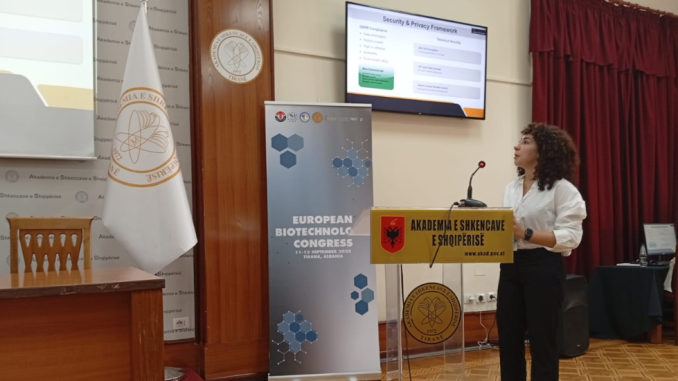
Tirana – The European Biotechnology Congress 2025, held in the Albanian capital from September 11 to 13, took on the shape of a true scientific atlas. Over three days of intensive work, participants navigated a world of laboratories, research centers, and universities, all gathered in a single space for dialogue and collaboration.
While the Balkans and the Mediterranean region played a central role, the event stood out for its ability to attract and showcase contributions from research groups across diverse geographic areas, constructing a narrative of science as a shared global endeavor.
Australia and the Future of Biocatalysis
Australia was among the most appreciated presences at the congress. Professor Adam Mechler presented pioneering applications of fluorescence correlation spectroscopy in the study of biological activity in natural peptides. His talk demonstrated how Australian research blends experimental precision with openness to innovative applications in both biotechnology and pharmaceutical development.
France and the “Ghost Proteome”
From France, Professor Tristan Cardon delivered a presentation with a compelling title: “Chasing the Ghost Proteome in Cancer.” His research addressed one of the central challenges in modern oncology—understanding elusive proteins that often go undetected by traditional techniques yet hold crucial implications for the development of next-generation cancer therapies.
The United Kingdom and the Bioplastics of the Future
The UK contributed significantly to the congress through the work of Professor Iza Radecka, who presented results on microbial bioplastics. These natural polymers, produced by microorganisms, are already among the most promising alternatives to petroleum-based plastics. Her presentation highlighted how biotechnology is actively shaping an ecological transition that is not just necessary, but already underway.
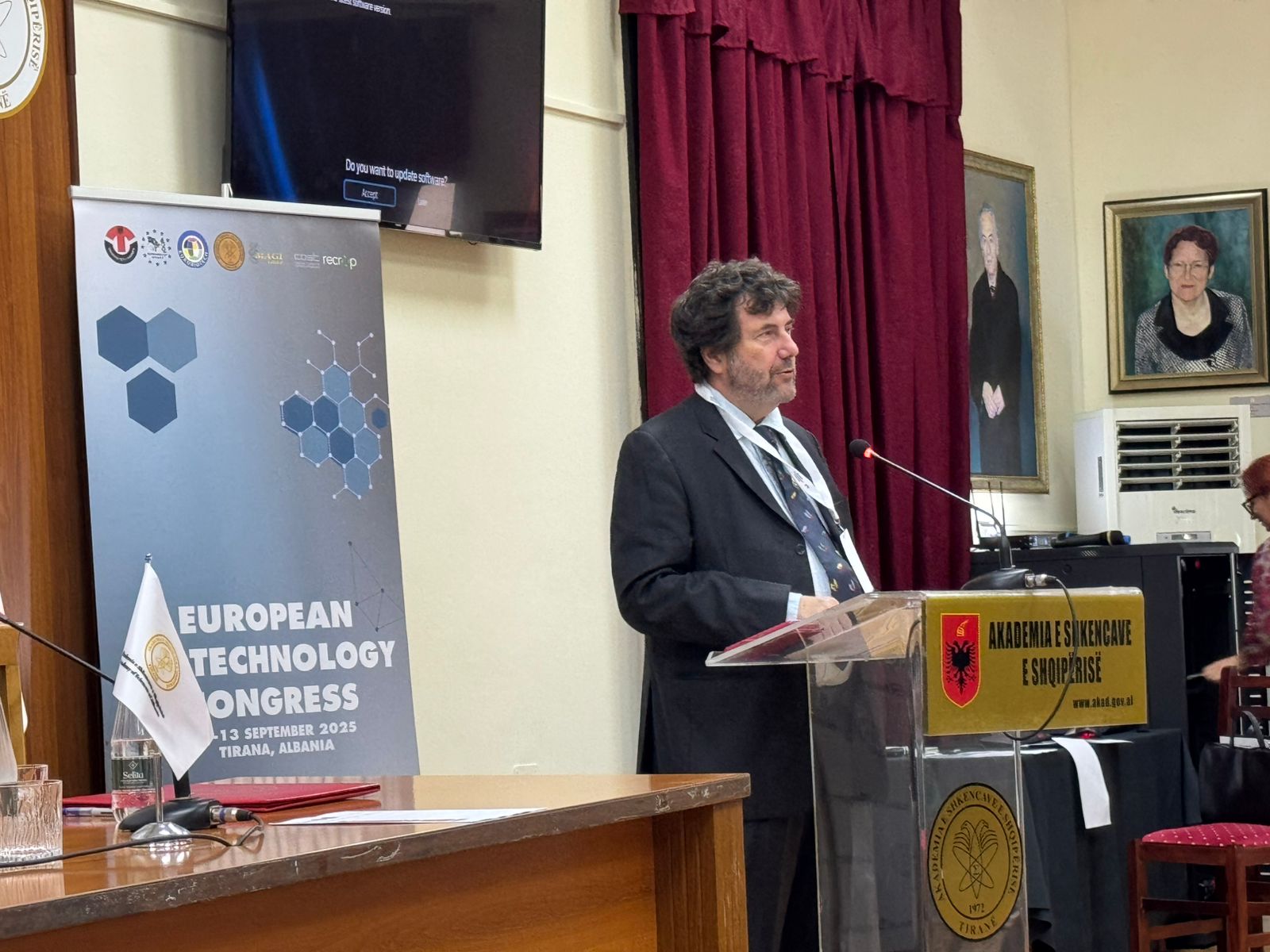
United States and Canada: Diagnostics and Probiotics
The North American contribution was of particularly high impact:
- From the United States, Professor Ratnesh Lal introduced a handheld biosensor designed for self-diagnosis—an innovation that may revolutionize the patient-medical relationship.
- From Canada, Professor Burim Ametaj explored the potential of probiotics as alternatives to antibiotics, with major implications for both human health and sustainable livestock farming.
A Network That Connects Continents
The congress served not only as a forum for academic exchange, but also as a platform to build global scientific alliances. From Australia to North America, from the United Kingdom to Southeast Europe, and through contributions from Israel, Turkey, and the Balkans, the Tirana gathering demonstrated that biotechnology today is already a planetary network of knowledge and innovation.
The setting provided by the Albanian capital, designated 2025 Mediterranean Capital of Culture and Dialogue, reinforced this message: science, like culture, thrives through exchange, openness, and shared perspectives.
Conclusion: A Congress That Became a World
The European Biotechnology Congress 2025 marked a step forward not only in scientific terms, but also in the geopolitical landscape of global research.
The diversity of contributions—from Asia to the Americas, from Europe to Oceania—made it clear that contemporary science knows no borders. Every lab, every university, and every research group is part of a larger, interconnected puzzle.
And in Tirana, for three days, that puzzle came to life—becoming a map of the global biotechnological future.